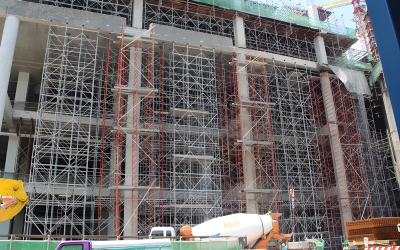

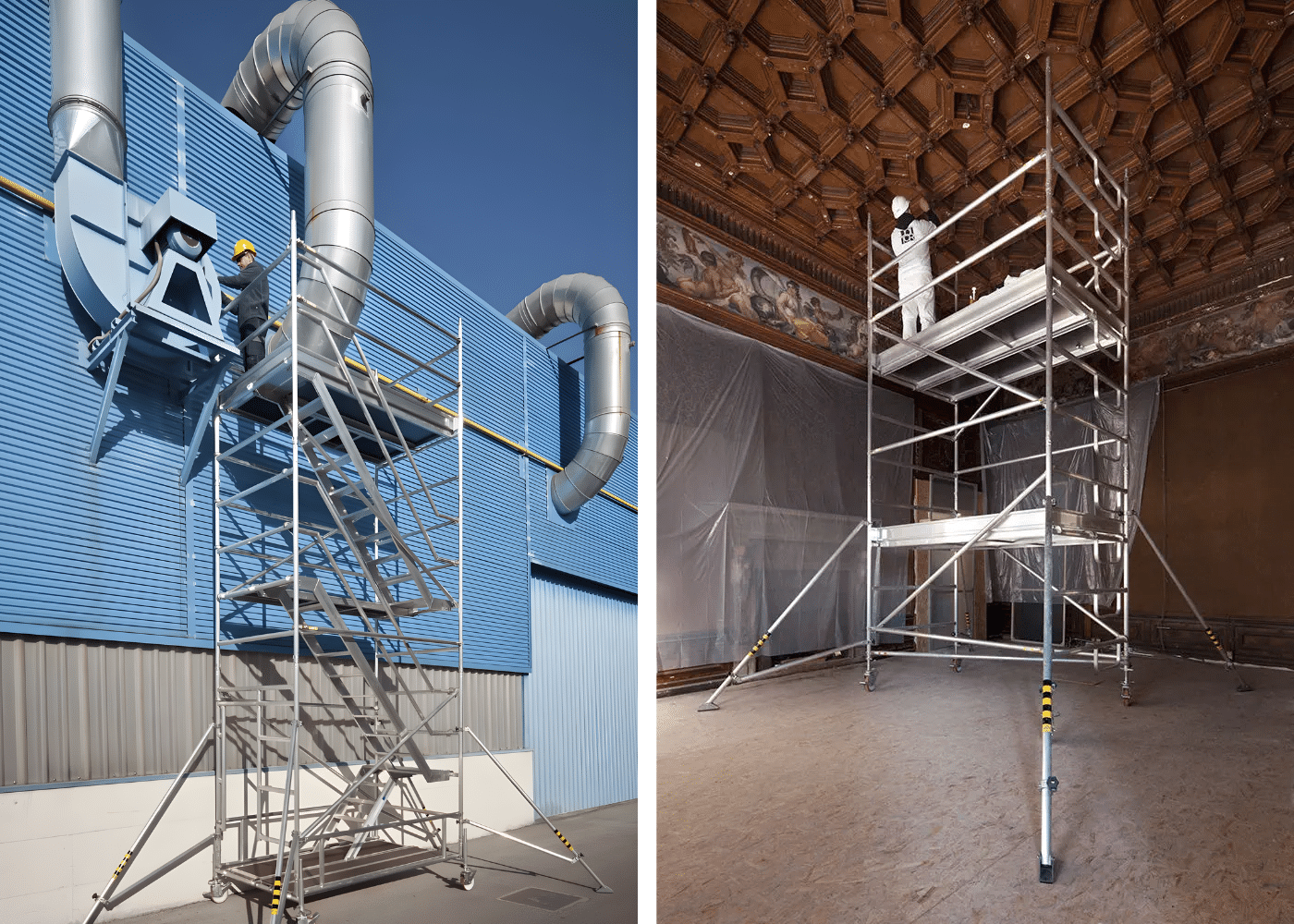
Scaffolding towers are modular access structures designed to provide temporary, elevated working platforms for construction, maintenance, and industrial operations. Unlike full-perimeter scaffolding systems, towers are typically freestanding and optimised for localised access, making them highly efficient for tasks requiring flexibility and controlled mobility.
Scaffolding towers are widely used in building environments, commercial projects, and diverse job sites. They provide a balance of rapid deployment, structural stability, and occupational safety. However, their safe use depends on strict adherence to design limits, proper assembly, and compliance with applicable standards.
What Is a Scaffolding Tower?
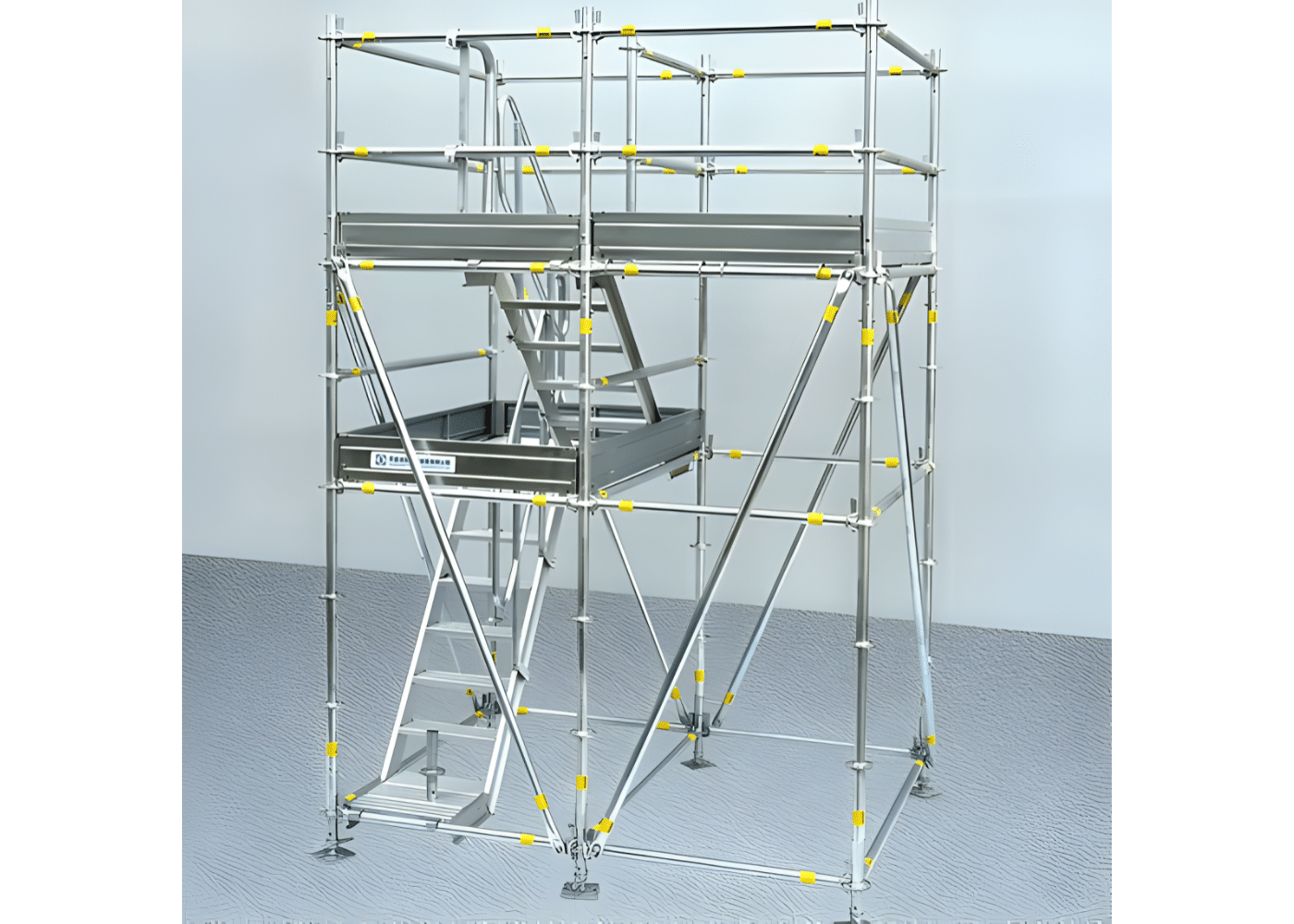
Scaffolding towers are freestanding structures providing secure access to elevated work areas without requiring full scaffolding coverage around a structure. A scaffolding tower is a vertical, modular structure assembled from prefabricated components. Scaffold towers typically feature walk-through frames, cross braces, steel planks, and guardrails to ensure stability and safety on job sites.
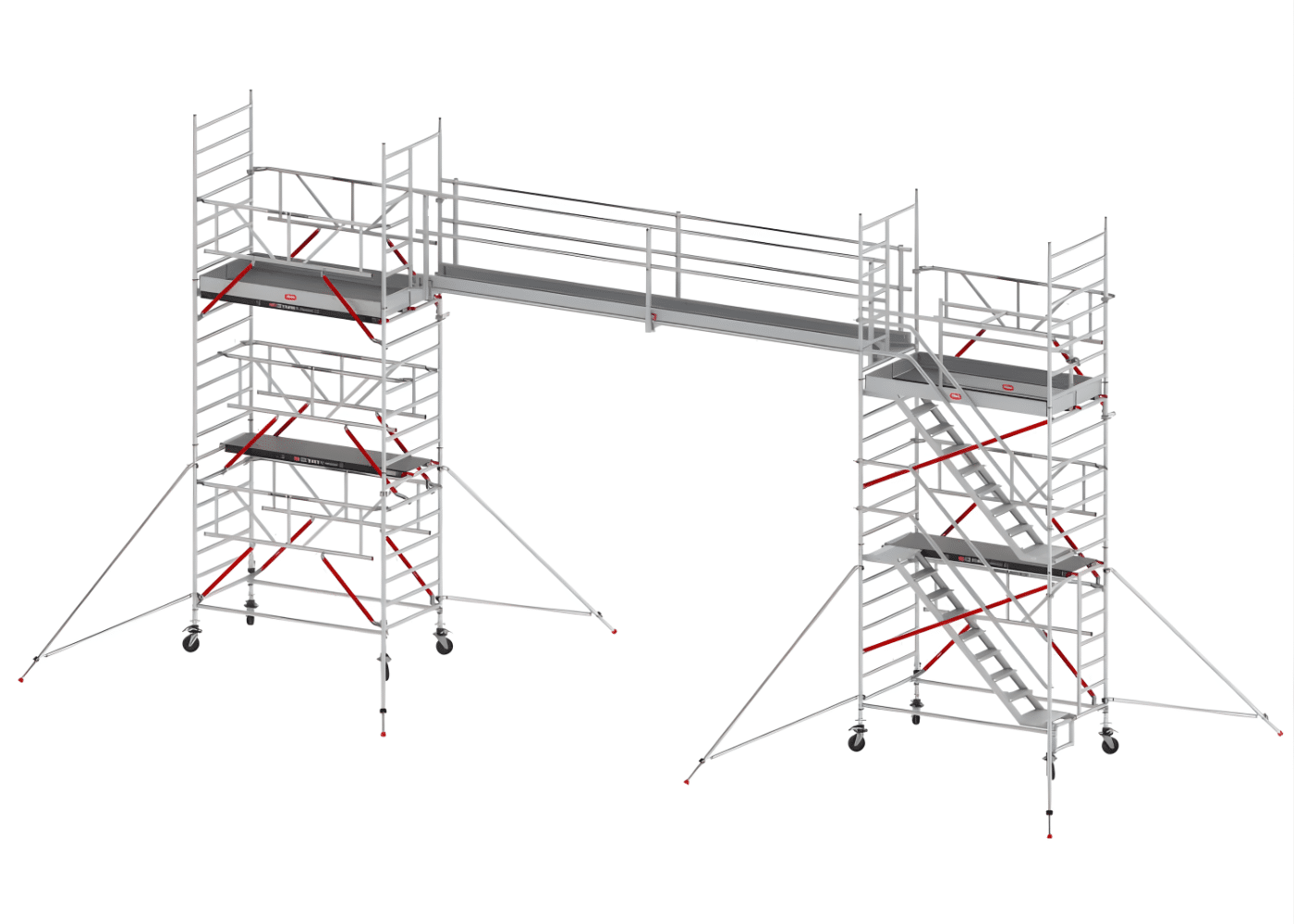
While towers can be self-supporting at lower heights, their stability is governed by height-to-base ratios. Beyond certain limits, additional stabilisation measures, such as outriggers or ties to the building, are required to prevent overturning.
Most modern towers are manufactured from aluminium due to its lightweight, portable nature, corrosion resistance, and ease of handling. However, steel towers are also used in heavy-duty or industrial applications. Aluminium scaffolding towers can be quickly erected, enabling efficient setup and use on job sites.

What Are The Types of Scaffolding Towers?
Scaffolding towers are available in a variety of configurations and options depending on access requirements, working height, and site conditions.
Mobile Scaffold Towers (Rolling Scaffold Tower)
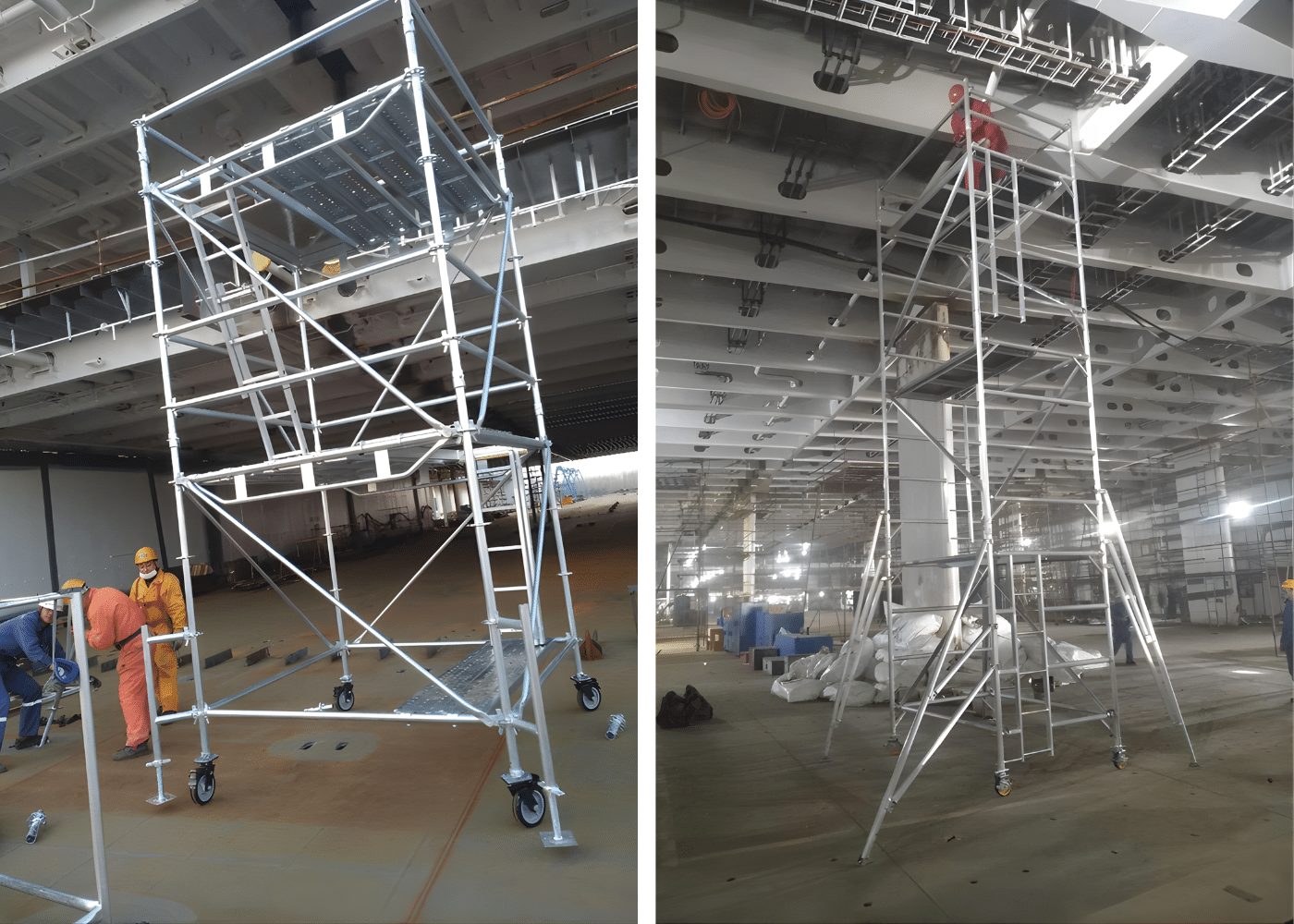
Mobile scaffold towers, also referred to as rolling scaffold towers, are equipped with heavy-duty caster wheels, allowing them to be repositioned across a work area without dismantling. These systems are commonly used in indoor environments such as factories, warehouses, and commercial buildings.
Movement of mobile towers is strictly controlled:
- Towers must not be moved while occupied
- Wheels must be locked during use
- Surfaces must be level and capable of supporting loads
Mobile towers are typically constructed from aluminium to reduce weight and improve handling efficiency.
Fixed Scaffolding Towers
Fixed towers are assembled in a stationary position and remain in place throughout the duration of the work. They provide higher inherent stability than mobile systems and are suitable for longer-term tasks or outdoor use where movement is not required. Stationary scaffold towers are designed for stability and durability, providing a fixed, high-capacity work platform.
Folding and Compact Towers
Compact or folding towers are designed for rapid deployment and transport. These systems are often used for short-duration work, maintenance operations, and confined locations where space is limited.
Stair Access Towers
Scaffold stair towers feature built-in stairs for easy multi-level access. They are commonly integrated into larger scaffolding systems or used independently on sites where frequent personnel movement is required.
Structural Components and System Configuration
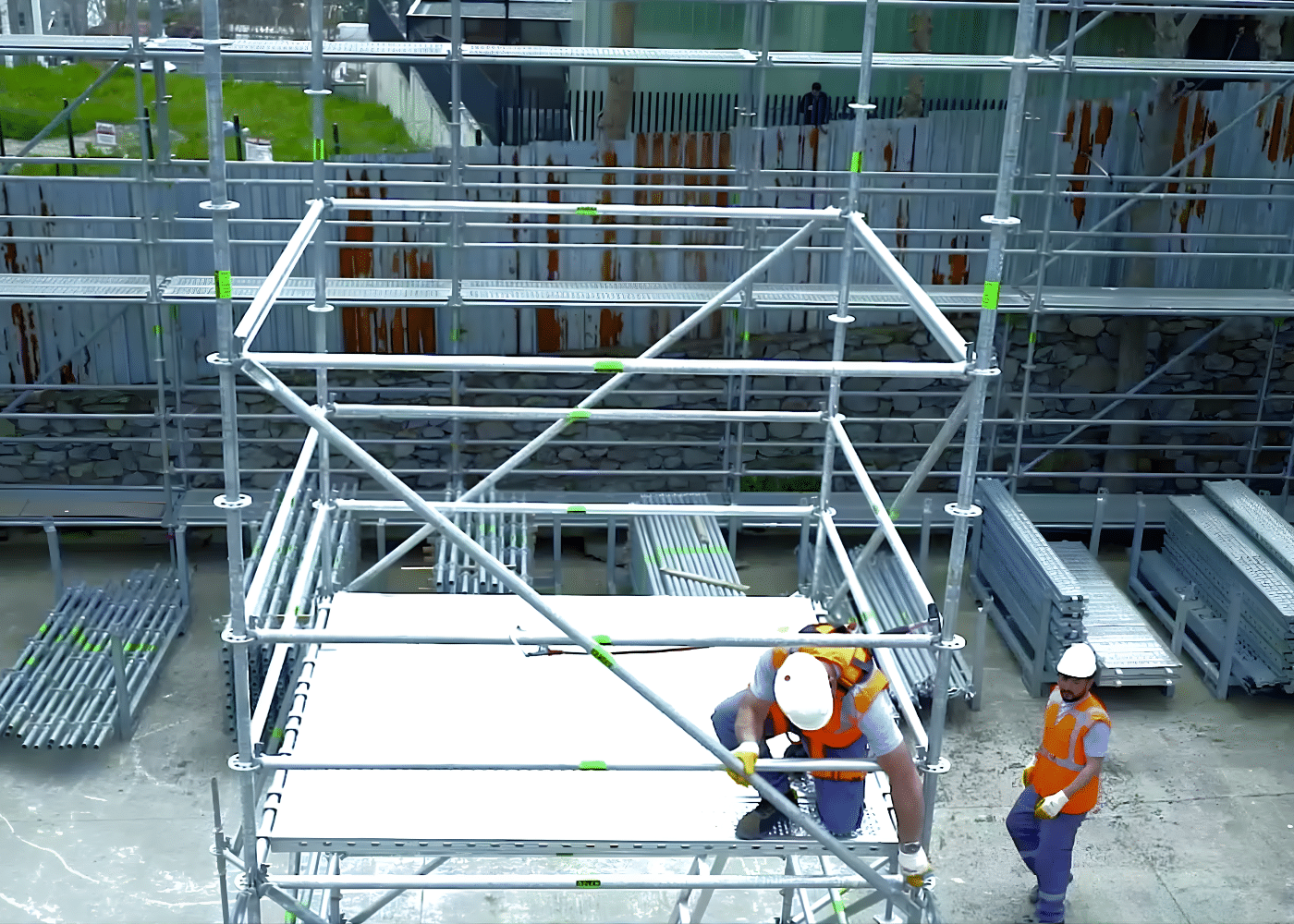
A scaffolding tower consists of interconnected components that must be assembled according to the manufacturer’s specifications to ensure structural integrity:
- Vertical frames or standards transferring loads to the base
- Horizontal and diagonal cross braces provide rigidity and prevent lateral movement
- Working platforms are designed to carry personnel and materials safely
- Guardrails and toe boards for fall protection
- Access systems, including ladders or stair units
- Base plates or caster wheels, depending on configuration
All elements scaffold tower includes must be securely attached, pinned, and aligned to ensure structural stability, safety, and long-term reliability.
Stability and Platform Height-to-Base Ratio
One of the most critical design parameters for scaffolding towers is the height-to-base ratio.
Typical guidance includes:
- Indoor use: maximum ratio of approximately 3:1
- Outdoor use: reduced ratios depending on wind exposure and standards
For example, a tower with a base width of 2 meters should not exceed approximately 6 meters in height without additional stabilization.
When these limits are exceeded, the following measures are required:
- Installation of outriggers to widen the base
- Tying the tower to a permanent structure
- Increasing base dimensions
Failure to respect these limits is a primary cause of tower instability and overturning.
Load Classes and Capacity
Scaffolding towers are designed for specific load classes, which define the allowable weight per platform.
Typical classifications include:
- Light duty: inspection and light maintenance
- Medium duty: general construction and installation work
- Heavy-duty: industrial applications with higher material loads
Load limits must account for:
- Personnel
- Tools and equipment
- Stored materials
Exceeding load capacity can lead to structural failure, even if the tower appears stable.
Environmental and Site Conditions
Environmental factors play a significant role in scaffolding tower safety, particularly for outdoor applications.
Key considerations include:
- Wind loads, which can destabilise tall or lightweight towers
- Uneven or soft ground conditions
- Obstacles such as holes, edges, or openings
- Overhead constraints such as ceilings or structural elements
Outdoor towers should not be used in high wind conditions unless specifically designed and secured for such environments.
Safety Requirements and Standards
Strict safety standards govern the use of scaffolding towers. In Europe, mobile access towers are typically designed and used in accordance with EN 1004. In the United States, OSHA standards define requirements for scaffolding systems, including fall protection and safe access. It is crucial to check local resources for additional criteria and regulations regarding scaffolding towers, as some areas may have stricter rules than EN 1004/OSHA’s federal guidelines.
Key safety requirements include:
- Assembly by trained and competent personnel
- Scaffolding towers should remain a minimum of 3 meters (10 feet) away from overhead power lines to avoid electrocution hazards
- Guardrails and toe boards must be installed on all open sides of the scaffold platform to prevent falls and keep tools from being knocked off
- Always use the internal ladder or designated access frames to climb a scaffolding tower
- Regular inspection for defects or loose connections
- Secure attachment or stabilisation where required
- Never exceed the maximum load capacity specified by the manufacturer for the scaffolding platform or tower
In addition to structural safeguards, appropriate safety equipment must be used to protect workers operating at height.
Safety is paramount in scaffolding tower construction, and assembled towers must comply with federal EN1004/OSHA regulations for base dimensions at their nominal height.
Common Applications
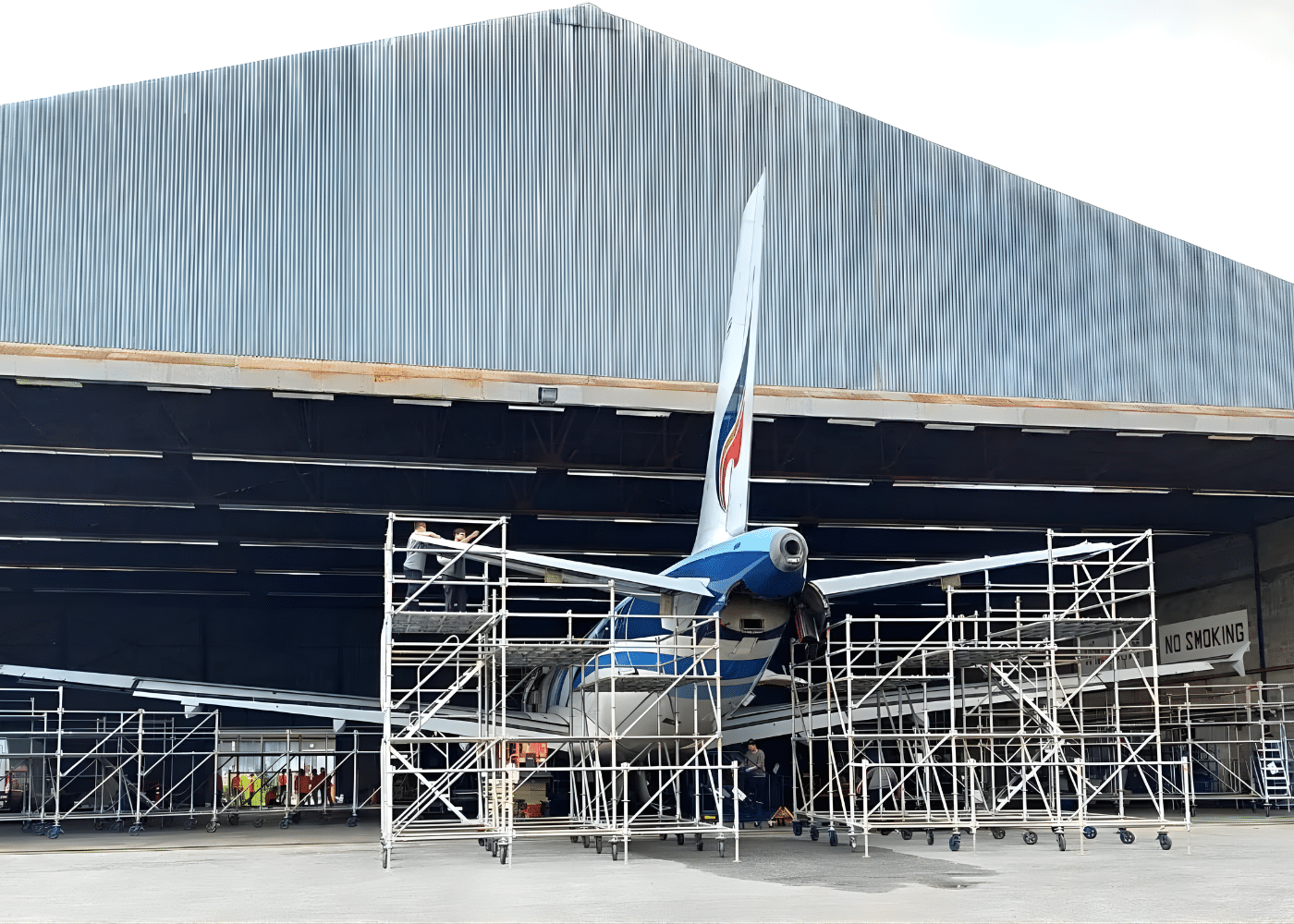
Scaffolding towers are used across a wide range of industries and working environments:
- Building maintenance and facade work, including wall and window access
- Electrical and mechanical installations at height
- Interior works such as ceiling installation and finishing
- Industrial maintenance in factories and processing facilities
- Temporary access solutions in multiple locations within a project
Their portability and adaptability make them ideal for users working across multiple locations where access needs frequently change.
Selecting the Right Scaffolding Tower
Choosing the correct scaffolding tower requires careful evaluation of project-specific requirements:
- Required platform height and working reach
- Frequency of relocation between work areas
- Indoor versus outdoor use
- Load requirements and work intensity
- Ground conditions and available space
In many cases, aluminium mobile towers are preferred for indoor maintenance, while fixed or stabilised towers are more appropriate for outdoor or long-duration work.
Selecting high-quality systems ensures performance, safety, and long-term usability across demanding job sites.
Conclusion
Scaffolding towers provide a versatile and efficient solution for working at height, combining mobility with structural performance. However, their safe use depends on understanding and respecting design limits, load capacities, and environmental constraints.
Their reliability, adaptability, and wide range of configurations make them a preferred solution across modern construction and industrial environments. When you follow proper assembly methods and comply with recognised standards, scaffolding towers provide safe, efficient access for many applications.
Contact us today to receive a tailored offer for your upcoming project.