
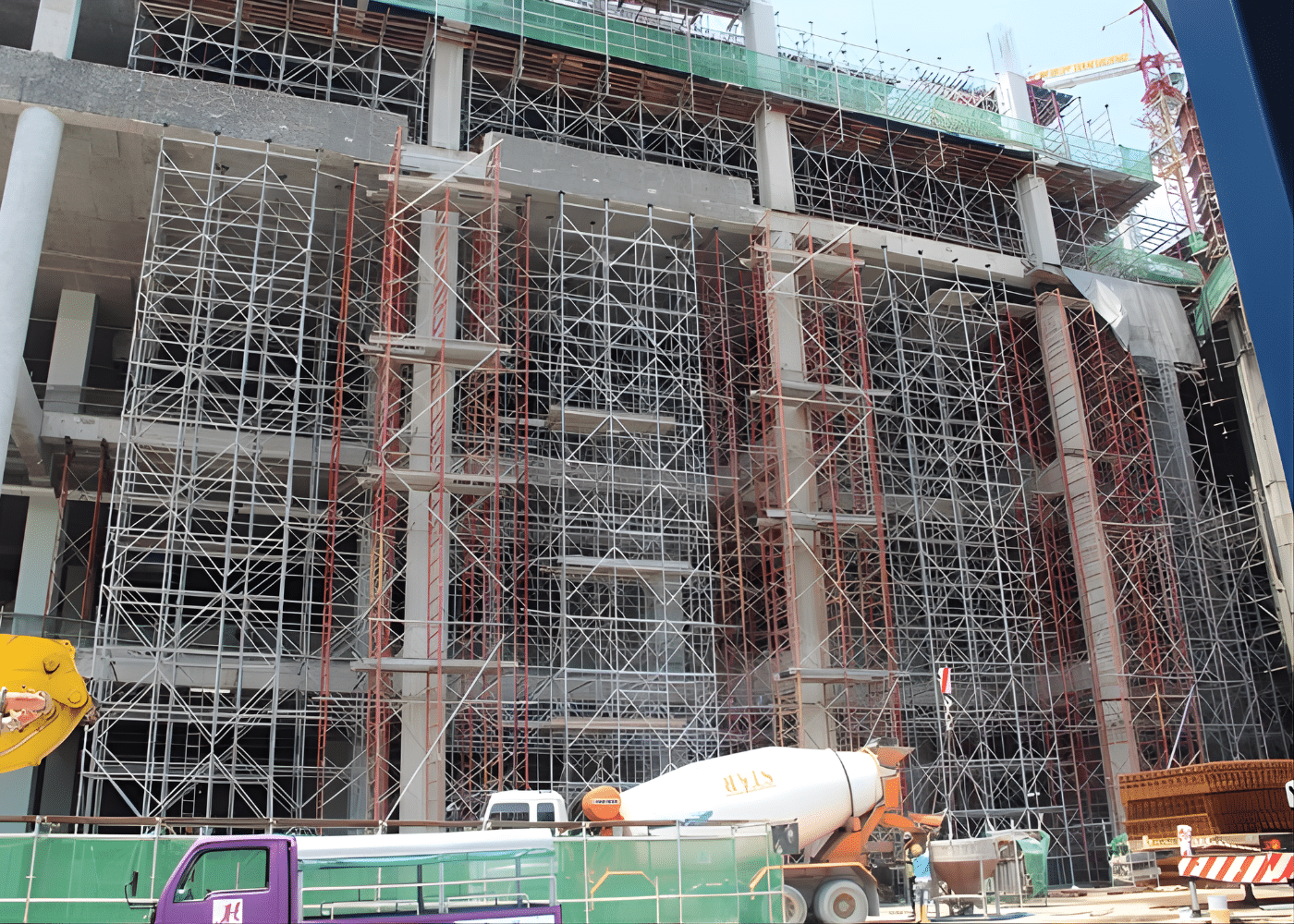
Scaffolding is a temporary structure used to provide safe access and working platforms for construction, maintenance, and repair activities carried out at height. It plays a critical role in modern construction by supporting work crews, tools, equipment and materials while reducing the risk of injuries and structural failure. From small residential projects to complex industrial facilities, scaffolding construction systems are essential for enabling work in areas that would otherwise be inaccessible or unsafe.
This article provides a comprehensive overview of scaffolding, including construction methods, system types, materials, key components, occupational safety principles, and common applications. It is intended for contractors, engineers, project managers, and companies involved in planning or executing construction and maintenance works.
What Is Scaffolding?
Scaffolding is a temporary access and support structure erected around or alongside buildings and structures used to support a work crew and materials during construction, maintenance, and repair works. Unlike permanent construction elements, scaffolding systems are designed to be assembled, modified, and dismantled as work progresses. Its primary functions are to ensure safe working conditions, support loads, and improve productivity by allowing continuous access to work areas.
Modern scaffolding has evolved significantly from early wooden staging methods to engineered systems designed for predictable performance, ease of assembly, and regulatory compliance.
In construction environments, scaffolding must meet strict requirements for stability, load capacity, and safety. The system selected depends on factors such as project height, duration, working load, and site conditions.
Why Scaffolding Is An Essential Temporary Structure in Construction?
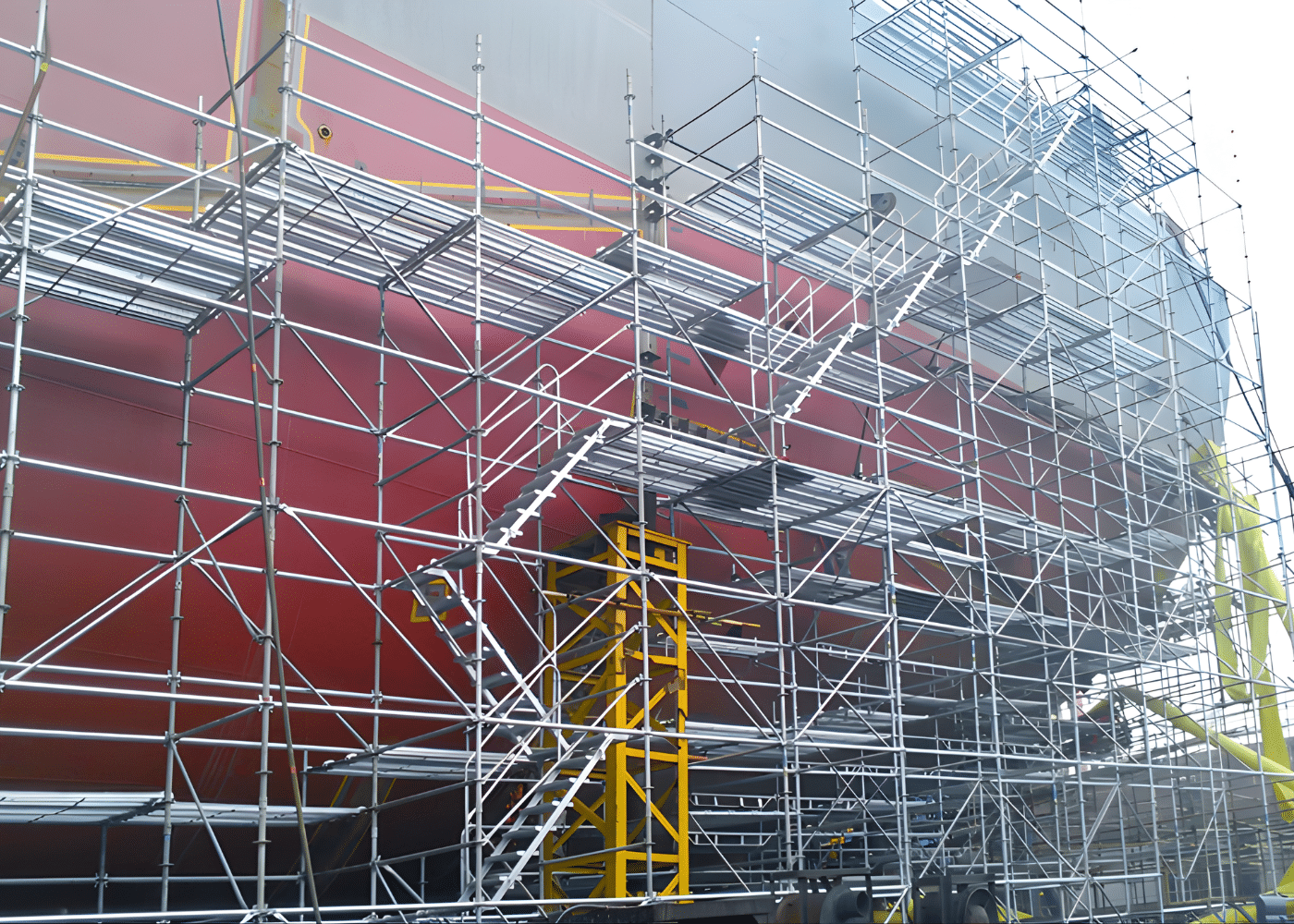
Scaffolding is a temporary construction practice that not only improves accessibility but also enhances safety and productivity on construction sites. Properly designed and installed scaffolding systems provide controlled working conditions that help prevent falls, structural defects, and material handling incidents.
Key benefits include:
- Safe access to elevated and difficult-to-reach areas
- Safe working platform for work crews and materials
- Reduced the likelihood of injuries and unplanned work stoppages
- Can be easily assembled and dismantled
- Compliance with safety standards and regulations
- Reduced risk of falls and structural accidents
Without scaffolding, many construction, maintenance, and repair activities would pose unacceptable risks to workers and the surrounding areas.
What are the Main Types of Scaffolding Systems
There are several types of scaffolding systems, each suited to specific construction needs and site constraints. Understanding their differences is essential when selecting the appropriate solution.
Frame Scaffolding
Frame scaffolding consists of prefabricated frames connected by cross braces. It is widely used in residential and light commercial construction due to its simplicity, fast assembly, and cost-effectiveness. Frame scaffolding is commonly seen in facade works, painting, and masonry projects.
Scaffolding Towers and Mobile Systems
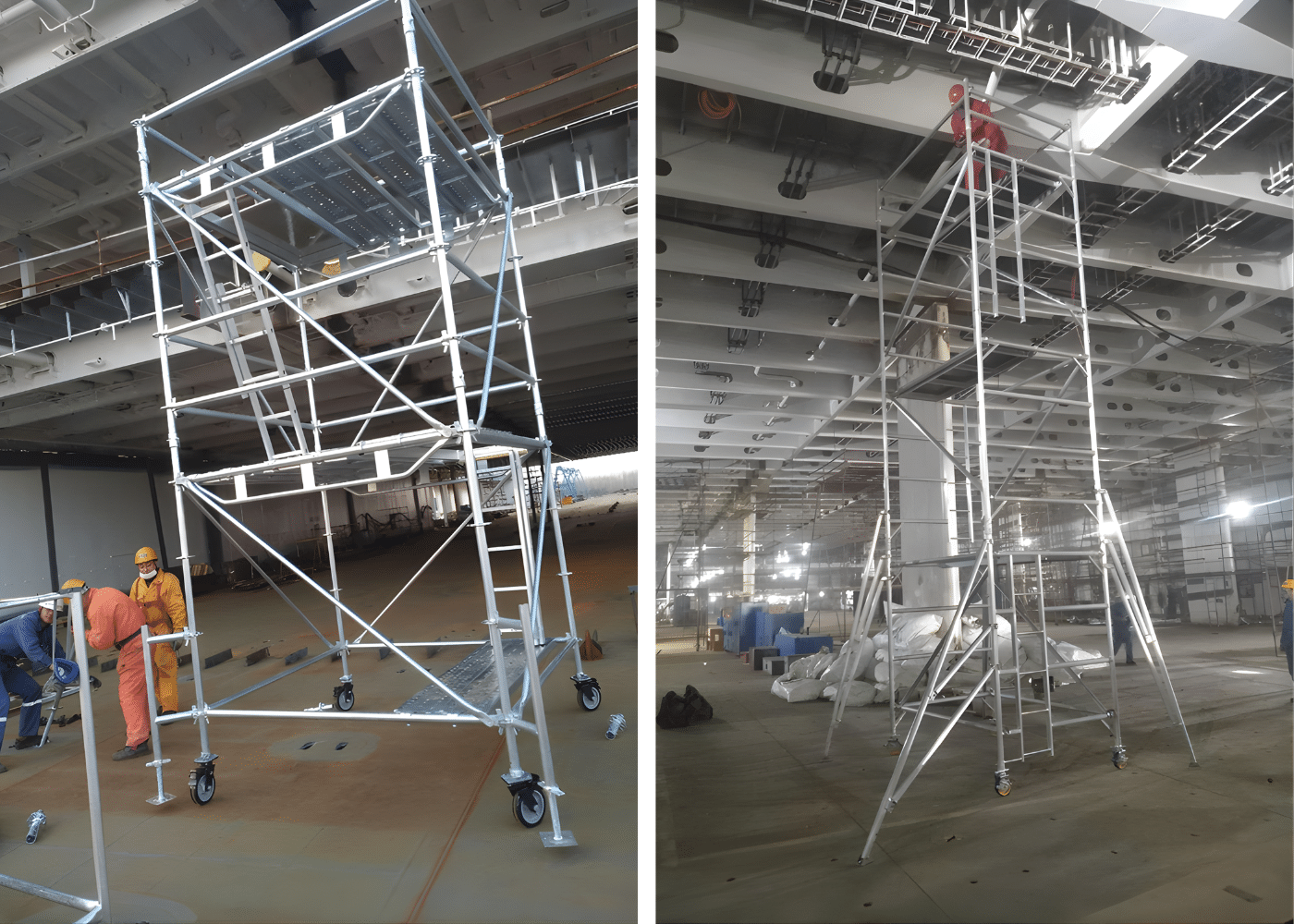
Scaffolding towers are freestanding access structures designed for vertical movement and short-term tasks. Mobile scaffolds, often mounted on lockable wheels, allow easy repositioning across a site without dismantling. These systems are especially useful for indoor work, maintenance tasks, and projects requiring frequent relocation.
Suspended and Cantilever Scaffolding
Suspended scaffolding is supported from above using steel wire ropes and often relies on outrigger beams positioned at roof level. It is commonly used for facade work, wall maintenance, and high-rise building applications where ground-based systems are not practical.
Cantilever scaffolding extends outward from a structure and is securely attached and tied to the building when lower levels cannot support a scaffold. Both systems require careful engineering analysis and must comply with OSHA standards to ensure safe operation.
Pump jacks are another specialised form of scaffolding commonly used in residential construction, particularly for siding installation. These systems allow platforms to be raised along vertical poles and are typically limited to lower levels.
Construction Scaffolding Systems
Construction scaffolding refers to heavy-duty systems designed for long-term use on active construction sites. These systems support higher loads and multiple work levels and are commonly used in commercial, industrial, and infrastructure projects.
Hybrid scaffolding systems combine multiple scaffolding types into a single solution for efficiency.
Scaffolding Materials Explained
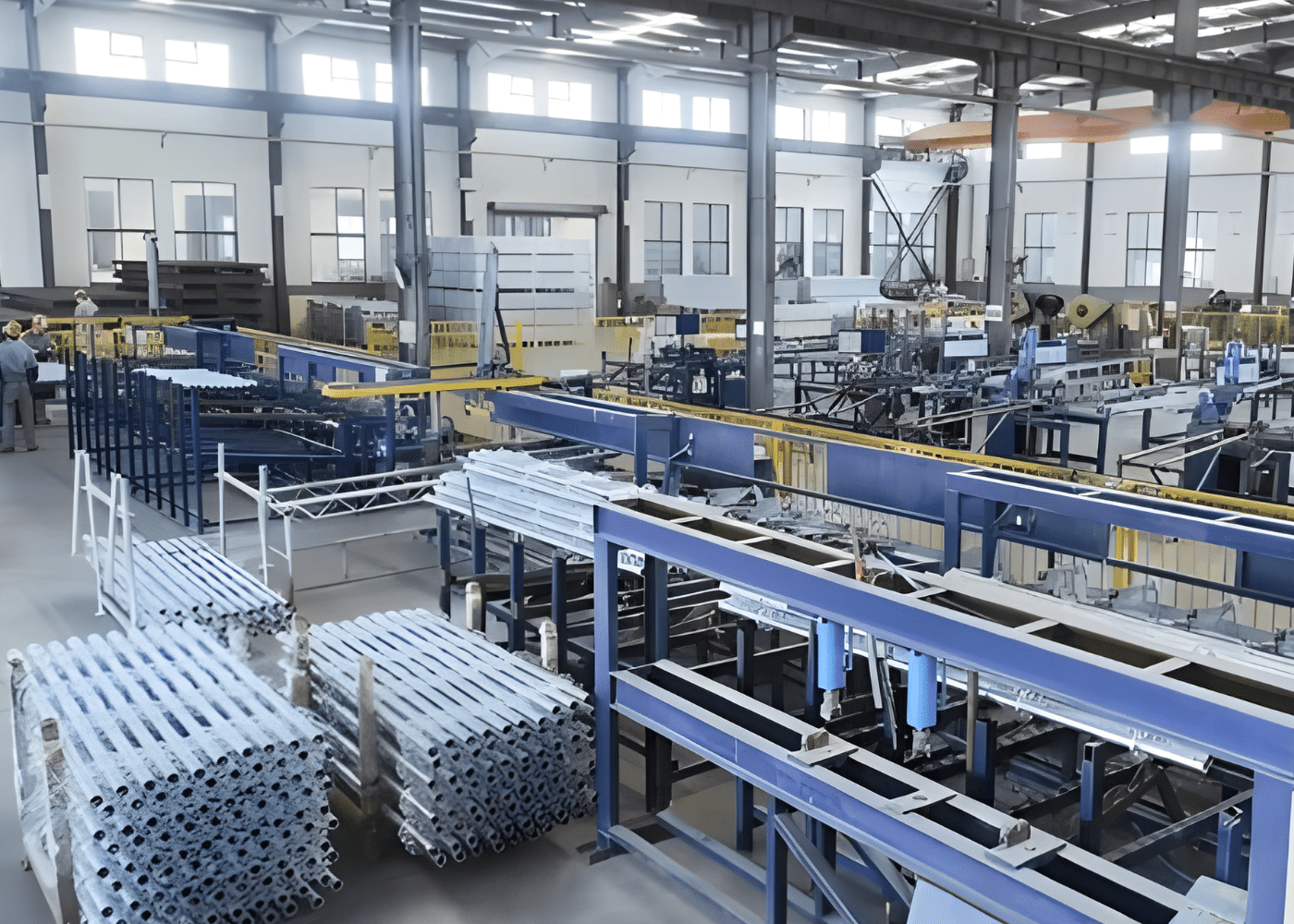
The material used in a scaffolding system directly affects its strength, weight, durability, and ability to perform safely in different locations and environmental conditions.
Steel Scaffolding
Steel scaffolding is known for its high strength, durability, load-bearing capacity, and long service life. It is commonly used in industrial and large-scale construction projects where heavy loads must be carried across multiple levels. Steel systems are stable and robust but heavier than aluminium alternatives, which can affect transportation and assembly time.
Aluminium Scaffolding
Aluminium scaffolding offers a light weight alternative without compromising structural performance for many applications. Its corrosion resistance makes it suitable for both indoor and outdoor use, and its lower weight allows for faster assembly and easier handling. Aluminium scaffolding is frequently used for mobile towers and maintenance work.
Wood Components
Although modern scaffolding frames are typically made of steel or aluminium, wood remains widely used for scaffolding planks and decking boards. High-quality wooden boards must be inspected for defects, cracks, or warping before use. When properly graded and installed, wooden planks provide stable working platforms that safely support workers and materials. However, they require regular inspection to prevent failure.
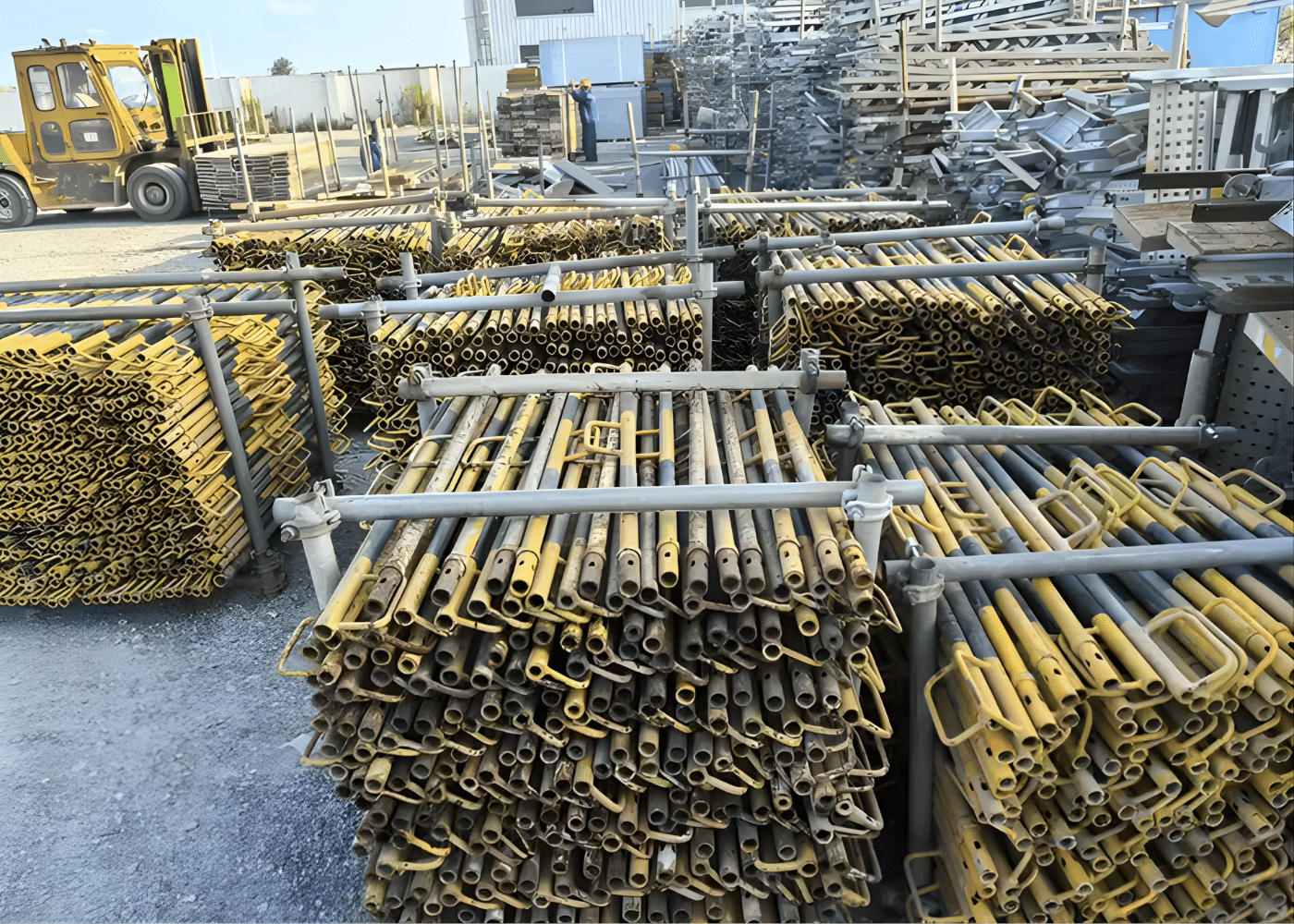
What Are the Key Scaffolding Components?
A scaffolding system is made up of multiple interconnected components that work together to ensure stability and safety:
- Standards: Vertical elements that transfer loads to the ground
- Ledgers and transoms: Horizontal components that connect standards and support platforms
- Scaffolding planks: Platforms on which workers stand, and materials are placed
- Base plates and adjustable jacks: Elements that distribute loads and level the structure
- Ladders and guardrails: Access and fall-protection components essential for safety
Each component must be compatible with the system and installed in accordance with the manufacturer’s guidelines.
Scaffolding Safety Fundamentals
Most scaffolding-related injuries occur due to improper assembly, missing guardrails, overloading, or failure to properly secure the system.
To work safely, scaffolding must:
- Be assembled and dismantled by trained personnel
- Respect specified load capacities and carrying limits
- Be securely attached and tied to the structure when required
- Be inspected regularly for defects and loosening connections
- Meet applicable OSHA scaffolding standards (The Occupational Safety and Health Administration (OSHA) sets guidelines for scaffolding safety and classifications)
- Provide safe access points such as ladders or stair towers
Adhering to safety fundamentals protects workers and reduces the likelihood of accidents and system failures. A competent person must conduct scaffolding inspections before each shift and after any event affecting stability. Working on scaffolding during storms or high winds is prohibited.
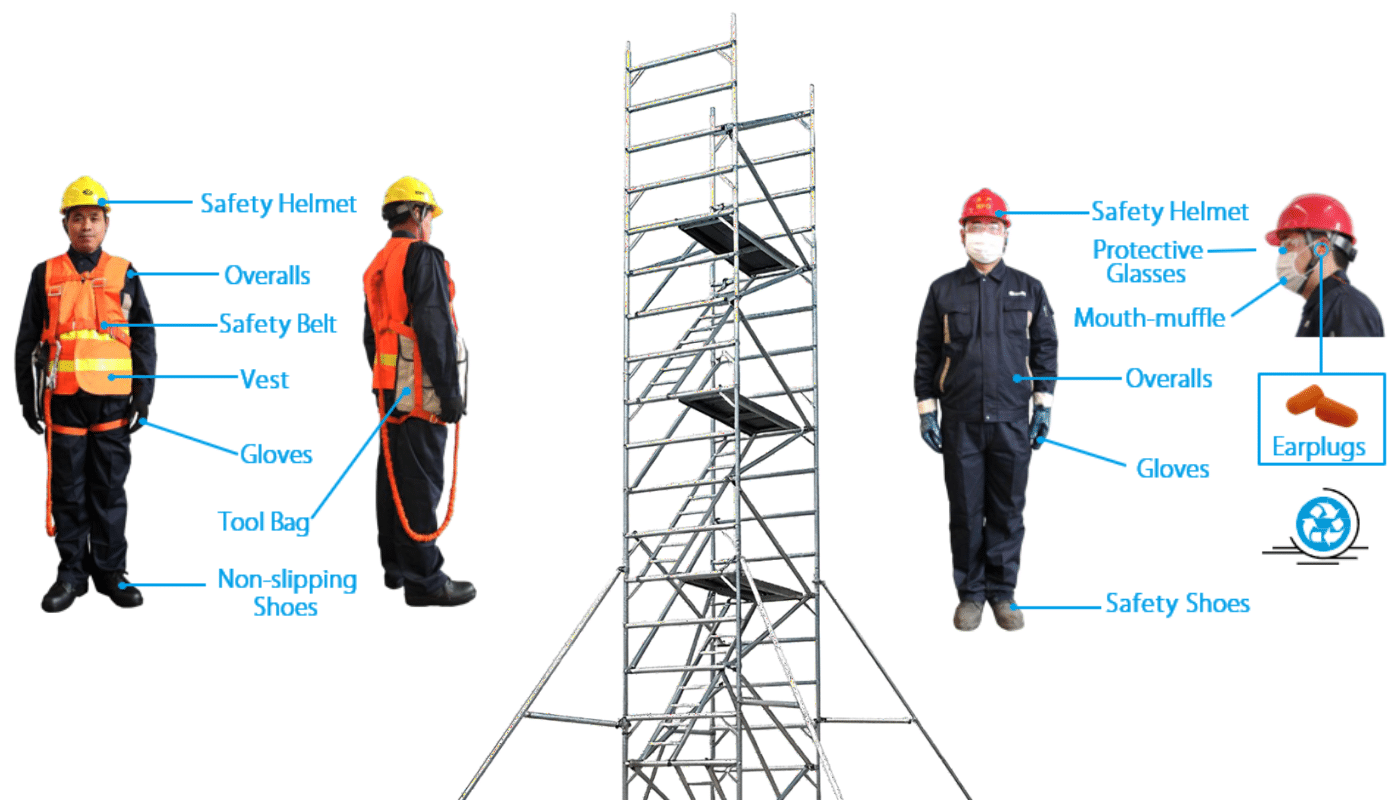
Personal Protective Equipment
In addition to structural safeguards, personal protective equipment plays a crucial role in preventing injuries on scaffolding. Workers operating at height must wear appropriate gear to reduce the risk of slips, falling objects, or structural movement.
Essential protective equipment typically includes:
- Hard hats to protect against falling materials (Falling objects like tools and debris are a common cause of injury for those working on scaffolding)
- Full-body harnesses connected to approved fall arrest systems
- Shock-absorbing lanyards or lifelines
- Non-slip, sturdy footwear designed for construction environments
- High-visibility clothing for improved awareness on busy sites
- Gloves and eye protection where required
OSHA and other regulatory bodies define clear requirements for fall protection when working above specified heights (Falls from scaffolding account for approximately 25% of all workplace fatalities). Proper training and proper use of equipment significantly reduce the likelihood of serious incidents.
Common Applications
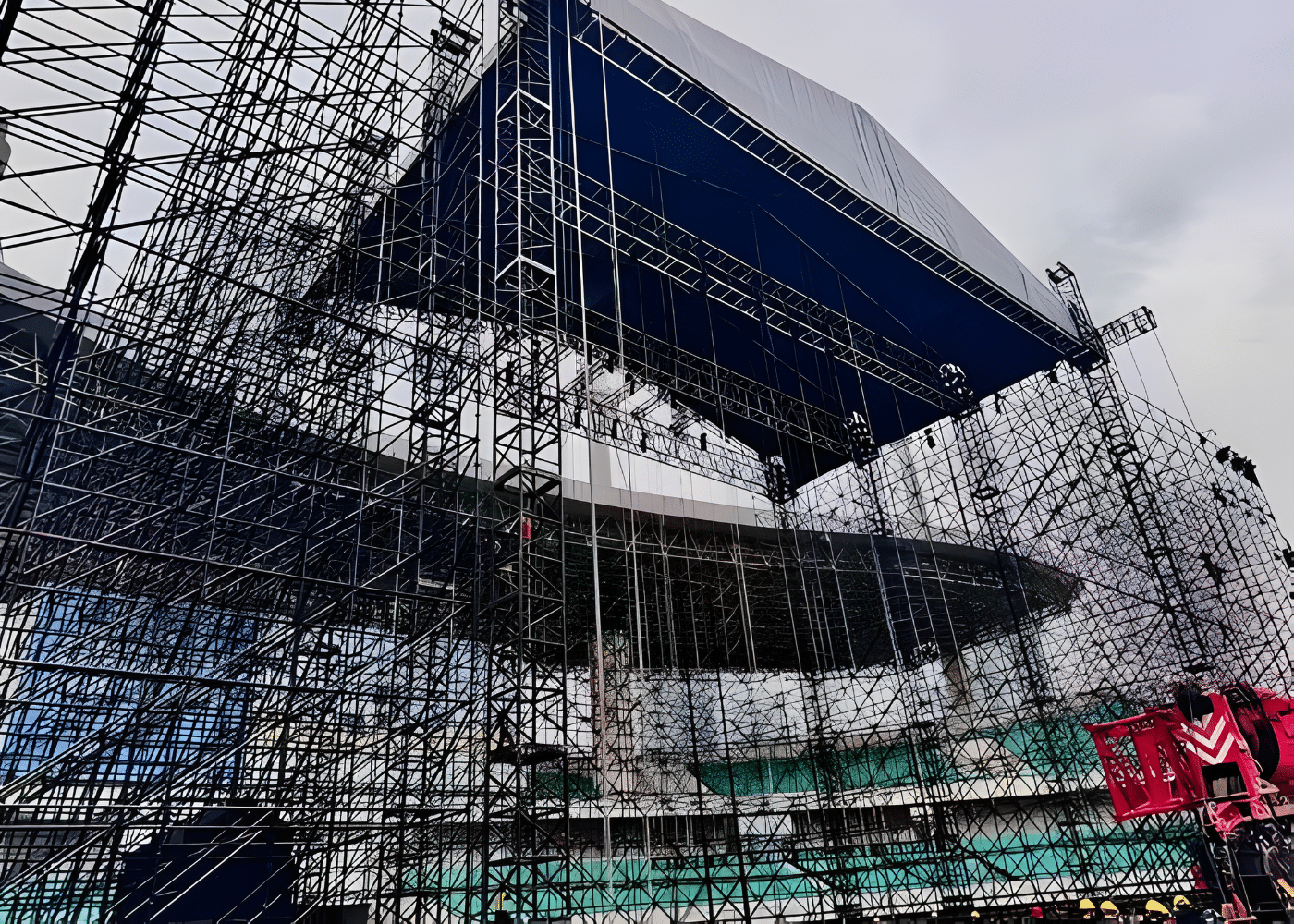
Scaffolding is used across a wide range of industries and project types, including:
- Residential building and renovation
- Commercial construction projects
- Industrial plants and processing facilities
- Facade works around windows and exterior surfaces
- Infrastructure maintenance and repair (such as bridges, highways, tunnels, overpasses, dams, etc.)
- Shipbuilding and maintenance
Each application places different demands on the scaffolding system, influencing the choice of type and material.
How to Choose the Right System
Selecting the appropriate scaffolding system requires careful evaluation of project requirements. Key factors to consider include:
- Required working height and horizontal distance
- Expected loads and number of workers
- Duration of use and frequency of relocation
- Ground conditions and the presence of holes or obstacles
- Environmental exposure and site constraints
Proper planning and analysis help ensure the selected system supports safe and efficient work.
Regulations and Compliance
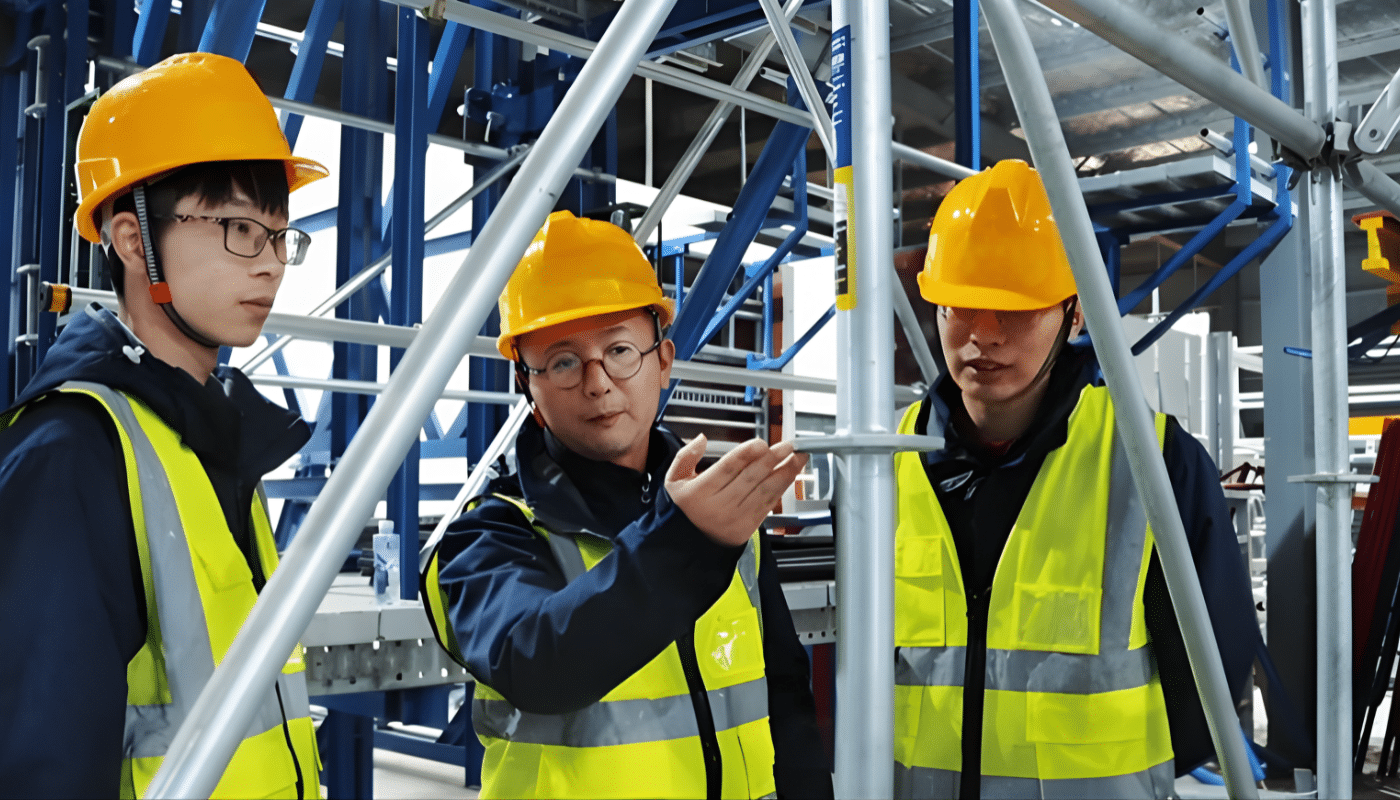
Scaffolding is subject to safety regulations that vary by country and region. These regulations typically define requirements for design, assembly, inspection, and worker training. Compliance is essential not only for legal reasons but also to ensure safe working conditions. Contractors and site managers should always verify that scaffolding systems meet applicable standards and local regulations.
Conclusion
Scaffolding is a vital construction system that enables safe access, structural support, and efficient work at height. By understanding the variety of scaffolding systems, materials, components, and safety principles, construction professionals can make informed decisions that reduce risks and improve project outcomes. Proper selection, assembly, and maintenance of scaffolding systems remain key factors in achieving safe and successful construction practice.
Contact us today to receive a tailored offer for your upcoming project.